
Archery arm guard size guide
By Corinne Vasek, club archery coach · Updated
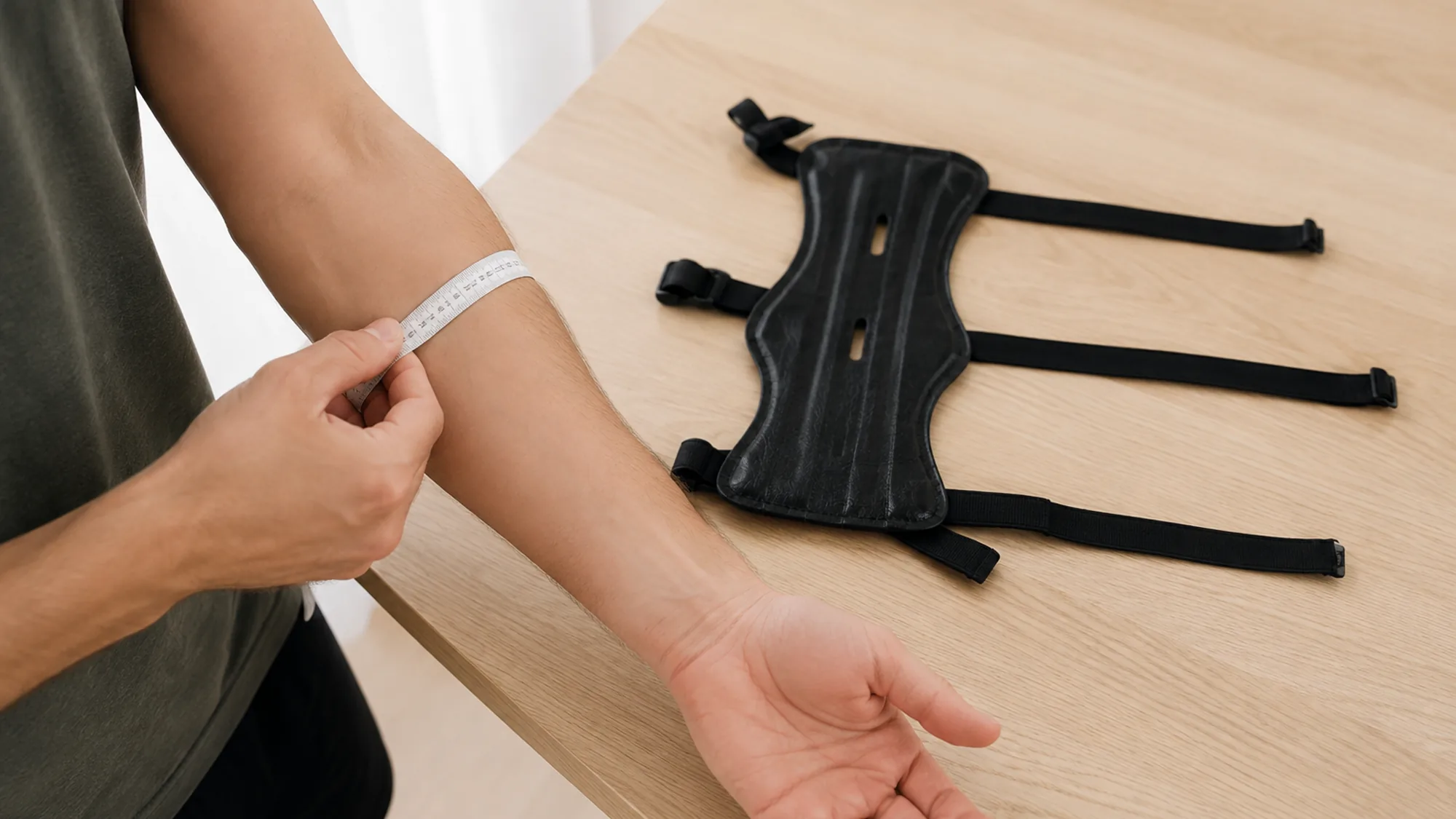
Most arm guards are sold as one size. Most of the time that is fine, which is why the phrase gets used so casually. But a forearm is one of the more variable parts of the human body, and one size covers a range rather than everybody.
Two measurements will tell you which side of that range you are on. It takes less time than reading this paragraph did, and it is the difference between a guard that works and a return.
On this page
The two measurements — where to put the tape.
Reading your numbers — what fits a one-size guard.
Length against circumference — the one people forget.
The two measurements
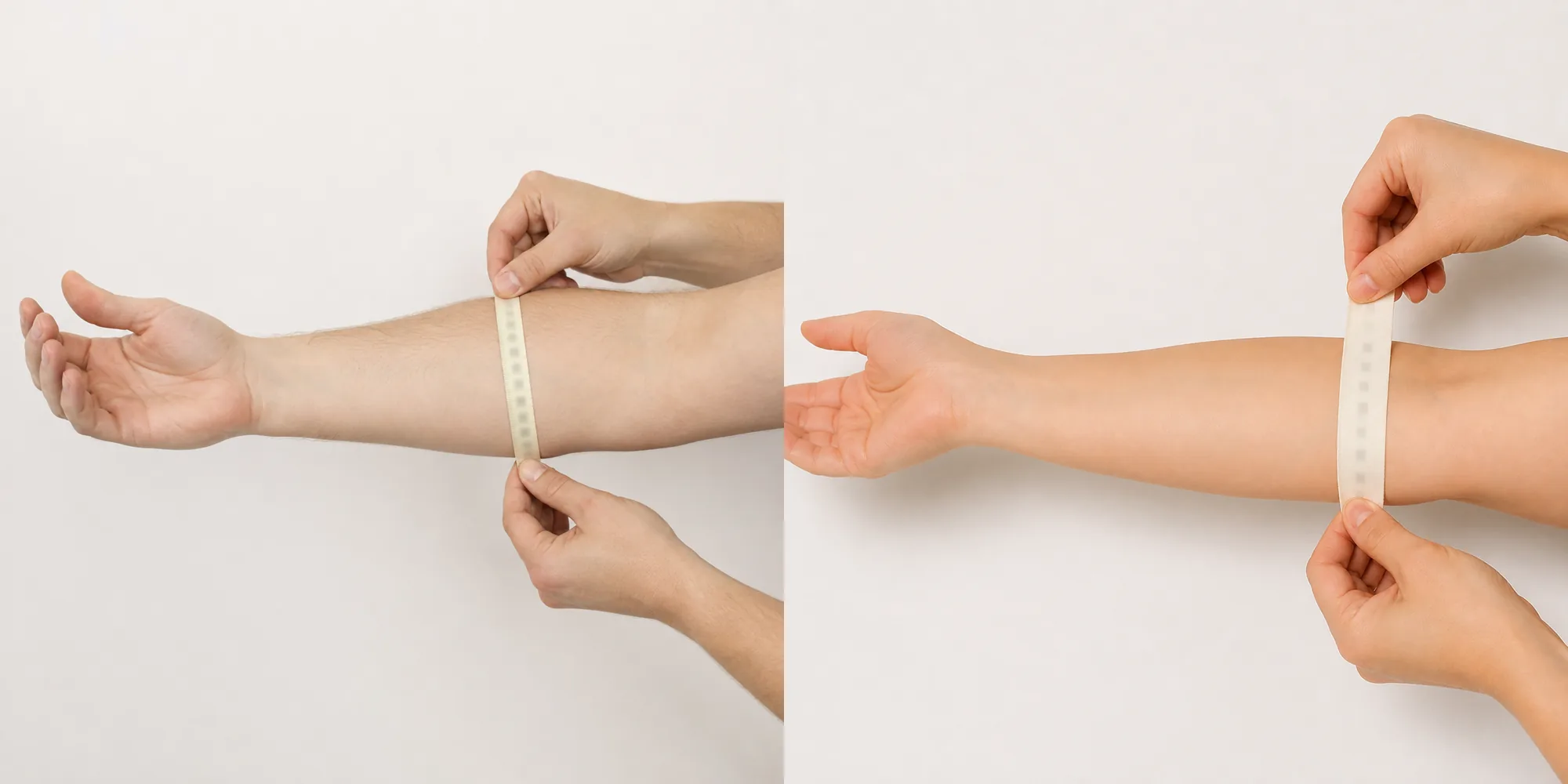
You need a tape measure, or a piece of string and a ruler. Measure your bow arm, which is the arm holding the bow: the left arm if you shoot right-handed, the right if you shoot left-handed. Relax the arm. Do not flex, and do not pull the tape tight enough to compress anything.
Measurement one, the widest point. Wrap the tape around your forearm at its thickest part, which for most people sits about a third of the way down from the elbow. Slide it up and down until you find the largest reading, then write that number down.
Measurement two, just below the elbow. Wrap the tape immediately below the elbow crease. On many people this is the same as measurement one, and on well-muscled forearms it is noticeably larger. This is the reading that catches people out, because a guard has to close around it.
If you want a third data point, measure the length from the wrist bone to the elbow crease along the inside of the forearm. That tells you about coverage rather than fit, and it matters for the section below.
Reading your numbers
| Widest forearm circumference | A one-size 3-strap guard will |
|---|---|
| Under 10 in (25 cm) | Fit with strap length to spare. Youth and slimmer adult arms. |
| 10 to 12 in (25 to 30 cm) | Fit comfortably. This is the range these guards are built around. |
| 12 to 13 in (30 to 33 cm) | Fit, with the straps toward the end of their adjustment. |
| Over 13 in (33 cm) | Probably not fit well. Look at a longer wrap-style or sleeve guard. |
These bands come from fitting guards on club members rather than from a manufacturer's chart, and they are deliberately conservative at the top end. A guard that only just closes will be uncomfortable within twenty minutes and will slide as soon as you sweat.
Length, not just circumference
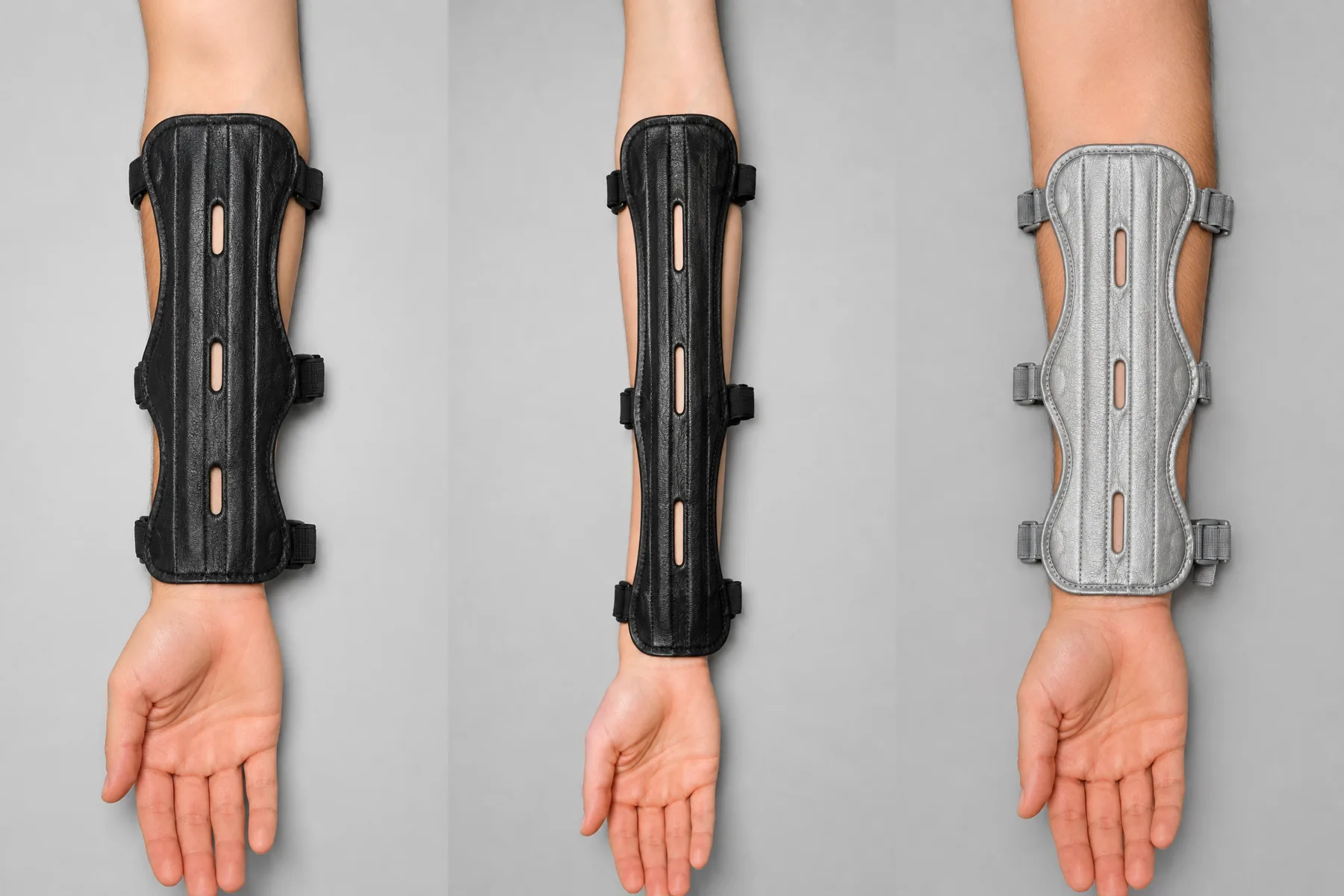
Circumference decides whether the guard closes. Length decides whether it covers the part of you that gets hit, and people forget to check it.
The string travels the full inner forearm, but the two places beginners actually get caught are just above the wrist and around the middle. A compact plate that sits over the middle third of a long forearm can leave the wrist end bare, and that is where you will get hit. If you have a long forearm, above roughly 11 inches from wrist bone to elbow crease, look for a guard that covers more of that run, or accept that you are protecting the middle and keep your wrist clear of the string by other means.
This is the weakness of every compact guard, ours included. It is a plate, not a sleeve, and a plate protects the area it covers.
Youth and junior archers
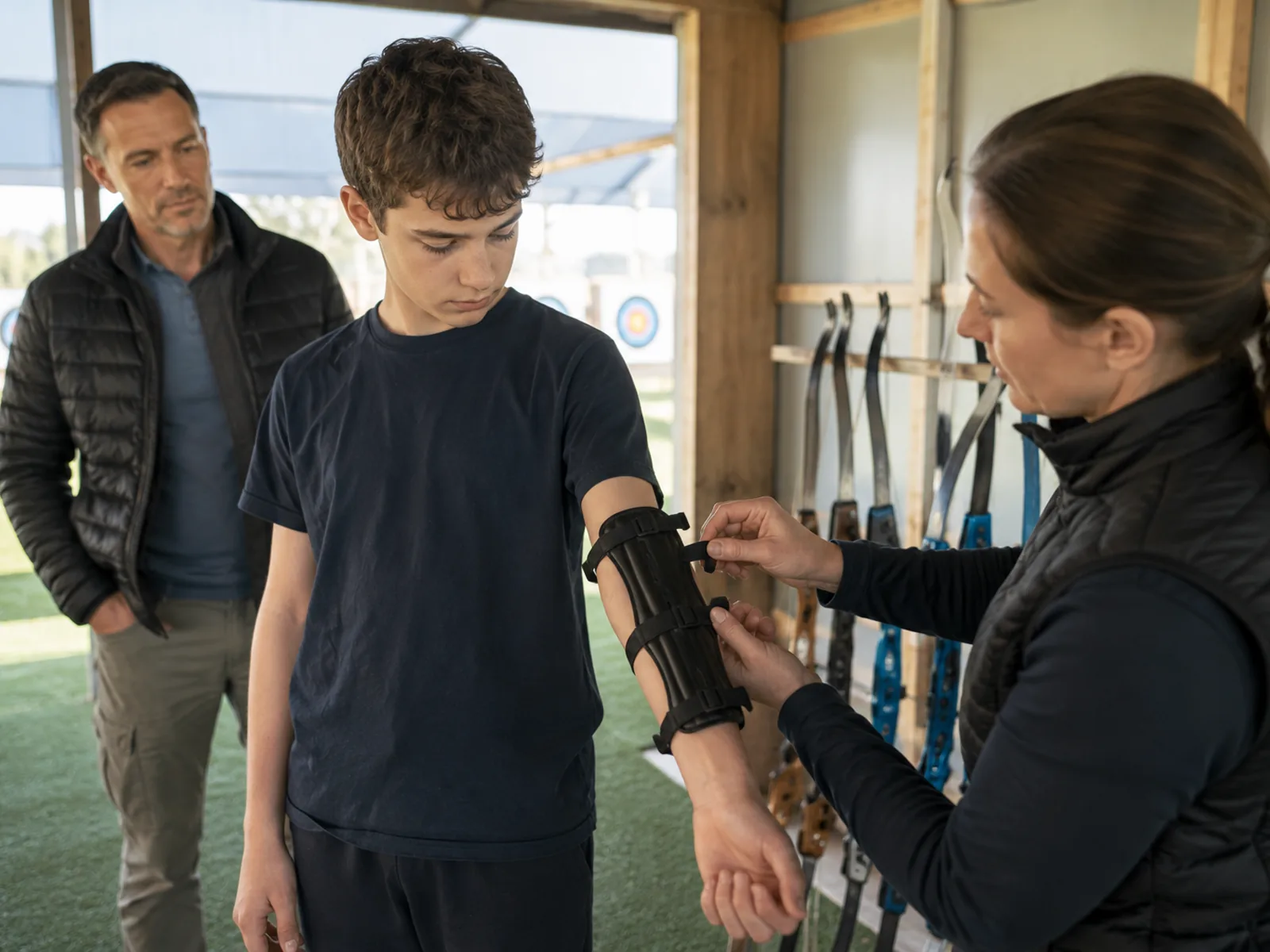
Most one-size adult guards will close down far enough for a teenager and many will work for a child of ten or so, because the straps are elastic and the adjustment range is generous at the small end. The problem is rarely that it will not tighten. The problem is that a plate sized for an adult forearm covers half of a child's arm and sticks out past the elbow, where it gets in the way of the draw.
For a junior archer, a shorter youth-specific guard is genuinely better. A club box full of adult guards will do for a taster session, and that is different from equipping a child who is going to shoot every week.
If a one-size guard will not work for you
Three formats cover forearms that sit outside the one-size range. Here is what each one does.
A sleeve guard. An elastic tube that pulls on and covers a longer run of forearm. It stretches to fit almost anyone and it suits long arms particularly well. It offers less impact spreading than a rigid plate and it tends to roll down over a session. Compared properly in guard against sleeve.
A long wrap-style guard. A rigid or semi-rigid plate covering wrist to elbow, usually with four straps. This is what target archers with long forearms tend to end up with. It costs more and it is warmer to wear.
A custom leather guard. Traditional makers will cut to your measurements. It is the best answer and it is priced accordingly, generally $45 upward, with a wait.
Why we publish no dimensions for our own guard
You will notice that this guide tells you how to measure yourself but never gives you a length and width for the guard we sell. That is deliberate, and it is worth explaining rather than leaving it looking like an oversight.
Exactly one dimension graphic is published for this guard. It looks authoritative, it gives a length and two widths, and it is branded. It also shows a guard with a solid unvented face and clip buckles, which is not the model in the buyer photographs and not the model that ships. Publishing those numbers would mean publishing a measurement of a different product.
So we left them out. It makes for a weaker product page, and we would rather have a weaker product page than a customer who ordered on the strength of a number we knew was borrowed. Measure your own arm against the bands in the table above, and the 30-day guarantee covers the rest.
The reviews support the bands. Of 41 written reviews, two say the guard is smaller than expected, one says it covers the entire forearm and fits well, and an Australian club bought ten of them for shared use, which only works across a spread of member sizes.
Measured, and in the range?
Three independently adjustable straps, vented PU leather, one size. $19.95 with free shipping and 30 days to change your mind.
See the arm guard →Related: how to wear an arm guard · what buyers say about the fit